• Home
  • All Posts
  • Tags
  • About
  • Atom feed
Ryan Blanchard

Aerodynamics

Xfoil for Fixed Wing UAV / Human-Powered Aircraft Design January 24, 2026 4 minute read

Why XFOIL Matters

Designing a wing always starts with the same uncomfortable gap:

You can draw a beautiful airfoil shape but how do you know what it does aerodynamically?

For conventional aircraft, that gap is often bridged with wind-tunnel data, empirical charts, or CFD. For small UAVs and human-powered aircraft, those options are either too expensive or too slow to iterate.

XFOIL, written in Fortran at MIT by Mark Drela mit.edu/drela/xfoil, sits precisely in that gap. It provides a fast, physics-based way to go from geometry to aerodynamic coefficients lift, drag, and moment as a function... read more
Propeller Design with XFOIL and QPROP December 25, 2025 4 minute read

Why Propeller Design Is Hard

A propeller is just a rotating wing, but that simple statement hides a lot of complexity.

Unlike a fixed wing, every blade section on a propeller:

  • Sees a different relative velocity
  • Operates at a different effective angle of attack
  • Contributes simultaneously to thrust and torque

Designing a propeller therefore requires closing a loop between:

  1. 2D airfoil performance
  2. 3D blade geometry
  3. Integral thrust, torque, and power

This is where XFOIL and QPROP come in. XFOIL provides the sectional aerodynamics. QPROP integrates those sections into a rotating blade model and predicts the... read more

Aerospace

Designing a Human-Powered Aircraft December 25, 2025 3 minute read

A Childhood Idea That Never Went Away

Some engineering projects start with a problem statement.
This one started with a PBS documentary.

I was a kid when I first saw a program about the Daedalus Project, the human-powered aircraft that successfully flew from Crete to Santorini. I don’t remember all the details, but I do remember what it did to my imagination. Suddenly, flying didn’t feel like something reserved for jet engines and control towers it felt almost personal. Human. Attainable.

Not long... read more

Afterburner

PhD Thesis: Afterburner Flame Dynamics December 29, 2025 4 minute read

Why Afterburners Are Hard

Afterburners live in a difficult corner of fluid mechanics: high-speed turbulent flow, intense heat release, strong recirculation, and unsteady pressure coupling. A flameholder has to do two contradictory things at once:

  • Create a stable recirculation zone to anchor a flame
  • Do as little damage as possible to pressure recovery and thrust

For vee-gutter bluff-body flameholders, stability comes from the wake. Hot combustion products recirculate behind the gutter, ignite incoming reactants, and sustain a flame even when residence times are extremely short. The same wake, however, is inherently unsteady and sheds vortices that can... read more

Algorithms

Optimization Is Easy. Posing the Problem Is Hard. November 21, 2025 5 minute read

Why Optimization Hooked Me Early

I’ve been obsessed with optimization for as long as I’ve known it existed.

As a freshman undergraduate, a friend showed me Excel Solver. I don’t even remember what we were trying to optimize, I just remember the feeling that a computer could search a design space for you. That single demo permanently rewired how I thought about engineering problems.

Not long after, I signed up for a graduate-level optimization algorithms course as a sophomore, before I had even taken linear algebra. I was wildly underprepared mathematically, but completely hooked intellectually.

That semester, I applied... read more

CAD

Starting a Formula SAE Team from Scratch December 25, 2025 3 minute read

What Formula SAE Is

Formula SAE is a student engineering competition where teams design, build, and race a small, open-wheel formula-style car. On paper it’s a motorsports competition. In reality, it’s one of the most intense systems-engineering learning environments you can experience as an undergraduate.

Teams are judged not just on lap time, but on:

  • Engineering design
  • Manufacturing quality
  • Cost and business case
  • Reliability and execution

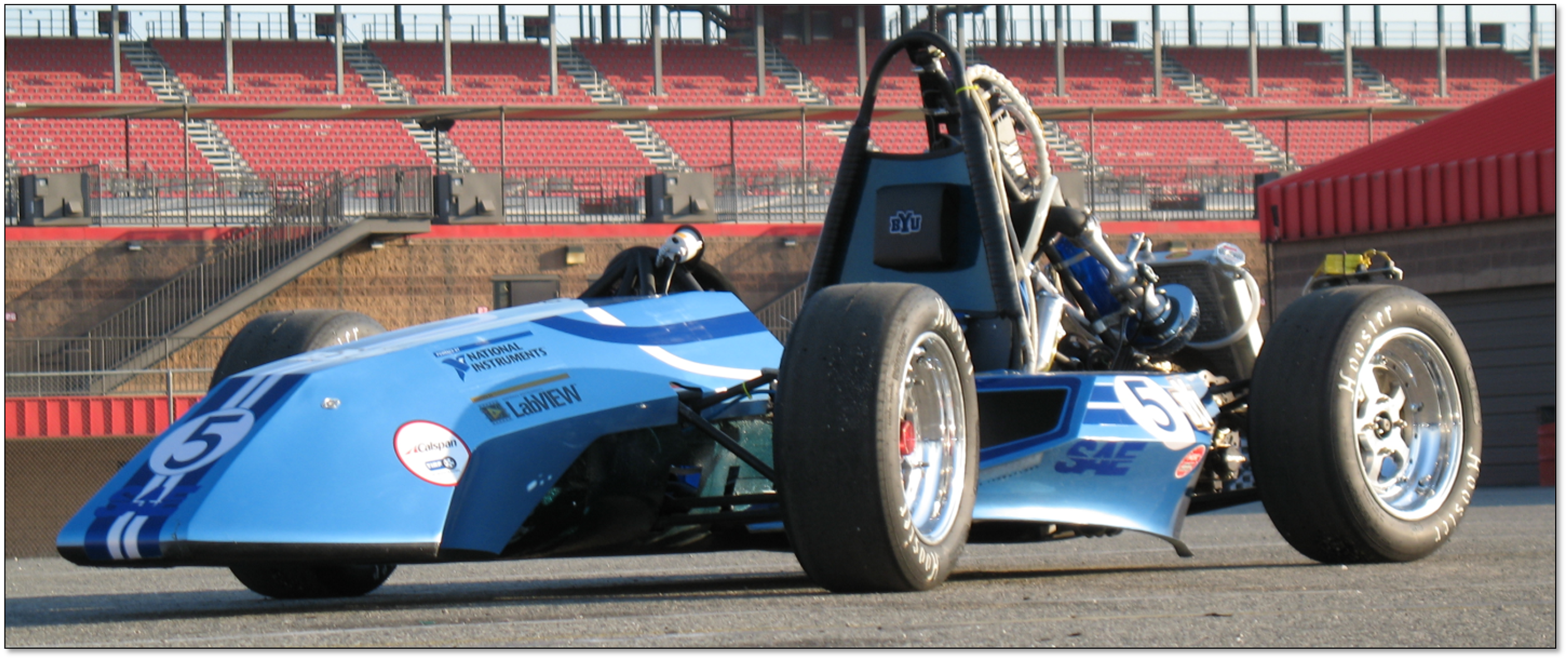
FSAE final The final car

Most established teams iterate year-to-year, refining designs using previous cars as testbeds. That luxury mattered a lot to us because we didn’t have... read more

Fixed Wing UAV Aero+Structural Design November 26, 2025 less than 1 minute read

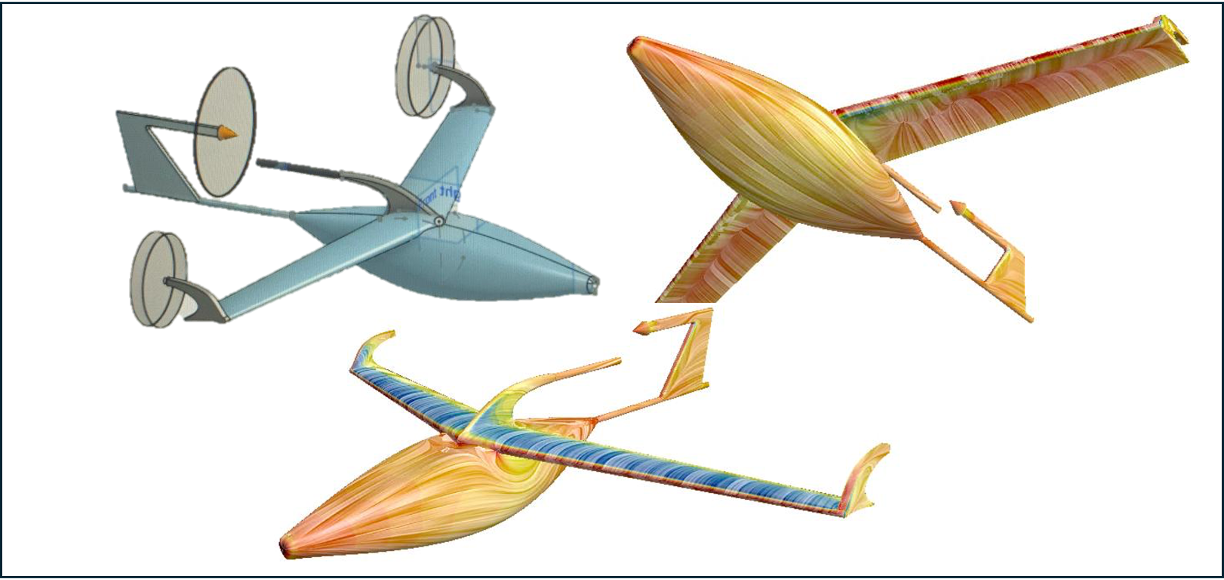
Coming Soon CFD Drone CFD for Drone Design

read more

CAE

Xfoil for Fixed Wing UAV / Human-Powered Aircraft Design January 24, 2026 4 minute read

Why XFOIL Matters

Designing a wing always starts with the same uncomfortable gap:

You can draw a beautiful airfoil shape but how do you know what it does aerodynamically?

For conventional aircraft, that gap is often bridged with wind-tunnel data, empirical charts, or CFD. For small UAVs and human-powered aircraft, those options are either too expensive or too slow to iterate.

XFOIL, written in Fortran at MIT by Mark Drela mit.edu/drela/xfoil, sits precisely in that gap. It provides a fast, physics-based way to go from geometry to aerodynamic coefficients lift, drag, and moment as a function... read more

Propeller Design with XFOIL and QPROP December 25, 2025 4 minute read

Why Propeller Design Is Hard

A propeller is just a rotating wing, but that simple statement hides a lot of complexity.

Unlike a fixed wing, every blade section on a propeller:

  • Sees a different relative velocity
  • Operates at a different effective angle of attack
  • Contributes simultaneously to thrust and torque

Designing a propeller therefore requires closing a loop between:

  1. 2D airfoil performance
  2. 3D blade geometry
  3. Integral thrust, torque, and power

This is where XFOIL and QPROP come in. XFOIL provides the sectional aerodynamics. QPROP integrates those sections into a rotating blade model and predicts the... read more

CFD

Fixed Wing UAV Aero+Structural Design November 26, 2025 less than 1 minute read

Coming Soon CFD Drone CFD for Drone Design

read more
Optimization Is Easy. Posing the Problem Is Hard. November 21, 2025 5 minute read

Why Optimization Hooked Me Early

I’ve been obsessed with optimization for as long as I’ve known it existed.

As a freshman undergraduate, a friend showed me Excel Solver. I don’t even remember what we were trying to optimize, I just remember the feeling that a computer could search a design space for you. That single demo permanently rewired how I thought about engineering problems.

Not long after, I signed up for a graduate-level optimization algorithms course as a sophomore, before I had even taken linear algebra. I was wildly underprepared mathematically, but completely hooked intellectually.

That semester, I applied... read more

Combustion

PhD Thesis: Afterburner Flame Dynamics December 29, 2025 4 minute read

Why Afterburners Are Hard

Afterburners live in a difficult corner of fluid mechanics: high-speed turbulent flow, intense heat release, strong recirculation, and unsteady pressure coupling. A flameholder has to do two contradictory things at once:

  • Create a stable recirculation zone to anchor a flame
  • Do as little damage as possible to pressure recovery and thrust

For vee-gutter bluff-body flameholders, stability comes from the wake. Hot combustion products recirculate behind the gutter, ignite incoming reactants, and sustain a flame even when residence times are extremely short. The same wake, however, is inherently unsteady and sheds vortices that can... read more

Control

Autonomous Robot Design Competition December 23, 2025 4 minute read

A Graduate Course Disguised as a Trial by Fire

As an undergraduate, my university allowed students to take up to three graduate-level courses as electives. For my first, I chose Mechatronics, partly because it sounded intimidating, and partly because I suspected it would force me to learn things I didn’t yet know I needed.

The course itself was largely conceptual. The real grade came from a semester-long group project: build an autonomous robot capable of navigating a complex course and completing a multi-object task under uncertainty.

I was grouped with two PhD students. Both were racing to finish and... read more

Cycling

Bikes, Sensors, and Differential Equations November 27, 2025 3 minute read

The Rabbit Hole Started With $P = \tau\,\omega$

Cycling is one of those rare sports where the input can be measured almost directly. The crank doesn’t care about vibes, power is power:

$$ P(t) = \tau(t)\,\omega(t) $$

When I bought my first road bike, I tried to estimate power the hard way: stopwatch timing between traffic lights, a hand-wavy drag estimate, and some back-of-the-envelope aero. It was surprisingly close on flat roads… until I bought the “real” sensors: GPS, heart rate, and eventually a power meter.

Suddenly I had the kind of data stream my inner... read more

Design

Designing a Human-Powered Aircraft December 25, 2025 3 minute read

A Childhood Idea That Never Went Away

Some engineering projects start with a problem statement.
This one started with a PBS documentary.

I was a kid when I first saw a program about the Daedalus Project, the human-powered aircraft that successfully flew from Crete to Santorini. I don’t remember all the details, but I do remember what it did to my imagination. Suddenly, flying didn’t feel like something reserved for jet engines and control towers it felt almost personal. Human. Attainable.

Not long... read more

Starting a Formula SAE Team from Scratch December 25, 2025 3 minute read

What Formula SAE Is

Formula SAE is a student engineering competition where teams design, build, and race a small, open-wheel formula-style car. On paper it’s a motorsports competition. In reality, it’s one of the most intense systems-engineering learning environments you can experience as an undergraduate.

Teams are judged not just on lap time, but on:

  • Engineering design
  • Manufacturing quality
  • Cost and business case
  • Reliability and execution

FSAE final The final car

Most established teams iterate year-to-year, refining designs using previous cars as testbeds. That luxury mattered a lot to us because we didn’t have... read more

Drone

Xfoil for Fixed Wing UAV / Human-Powered Aircraft Design January 24, 2026 4 minute read

Why XFOIL Matters

Designing a wing always starts with the same uncomfortable gap:

You can draw a beautiful airfoil shape but how do you know what it does aerodynamically?

For conventional aircraft, that gap is often bridged with wind-tunnel data, empirical charts, or CFD. For small UAVs and human-powered aircraft, those options are either too expensive or too slow to iterate.

XFOIL, written in Fortran at MIT by Mark Drela mit.edu/drela/xfoil, sits precisely in that gap. It provides a fast, physics-based way to go from geometry to aerodynamic coefficients lift, drag, and moment as a function... read more

Dynamics

PhD Thesis: Afterburner Flame Dynamics December 29, 2025 4 minute read

Why Afterburners Are Hard

Afterburners live in a difficult corner of fluid mechanics: high-speed turbulent flow, intense heat release, strong recirculation, and unsteady pressure coupling. A flameholder has to do two contradictory things at once:

  • Create a stable recirculation zone to anchor a flame
  • Do as little damage as possible to pressure recovery and thrust

For vee-gutter bluff-body flameholders, stability comes from the wake. Hot combustion products recirculate behind the gutter, ignite incoming reactants, and sustain a flame even when residence times are extremely short. The same wake, however, is inherently unsteady and sheds vortices that can... read more

Engineering

Optimization Is Easy. Posing the Problem Is Hard. November 21, 2025 5 minute read

Why Optimization Hooked Me Early

I’ve been obsessed with optimization for as long as I’ve known it existed.

As a freshman undergraduate, a friend showed me Excel Solver. I don’t even remember what we were trying to optimize, I just remember the feeling that a computer could search a design space for you. That single demo permanently rewired how I thought about engineering problems.

Not long after, I signed up for a graduate-level optimization algorithms course as a sophomore, before I had even taken linear algebra. I was wildly underprepared mathematically, but completely hooked intellectually.

That semester, I applied... read more

Experiment

PhD Thesis: Afterburner Flame Dynamics December 29, 2025 4 minute read

Why Afterburners Are Hard

Afterburners live in a difficult corner of fluid mechanics: high-speed turbulent flow, intense heat release, strong recirculation, and unsteady pressure coupling. A flameholder has to do two contradictory things at once:

  • Create a stable recirculation zone to anchor a flame
  • Do as little damage as possible to pressure recovery and thrust

For vee-gutter bluff-body flameholders, stability comes from the wake. Hot combustion products recirculate behind the gutter, ignite incoming reactants, and sustain a flame even when residence times are extremely short. The same wake, however, is inherently unsteady and sheds vortices that can... read more

FEA

Starting a Formula SAE Team from Scratch December 25, 2025 3 minute read

What Formula SAE Is

Formula SAE is a student engineering competition where teams design, build, and race a small, open-wheel formula-style car. On paper it’s a motorsports competition. In reality, it’s one of the most intense systems-engineering learning environments you can experience as an undergraduate.

Teams are judged not just on lap time, but on:

  • Engineering design
  • Manufacturing quality
  • Cost and business case
  • Reliability and execution

FSAE final The final car

Most established teams iterate year-to-year, refining designs using previous cars as testbeds. That luxury mattered a lot to us because we didn’t have... read more

Fixed Wing

Xfoil for Fixed Wing UAV / Human-Powered Aircraft Design January 24, 2026 4 minute read

Why XFOIL Matters

Designing a wing always starts with the same uncomfortable gap:

You can draw a beautiful airfoil shape but how do you know what it does aerodynamically?

For conventional aircraft, that gap is often bridged with wind-tunnel data, empirical charts, or CFD. For small UAVs and human-powered aircraft, those options are either too expensive or too slow to iterate.

XFOIL, written in Fortran at MIT by Mark Drela mit.edu/drela/xfoil, sits precisely in that gap. It provides a fast, physics-based way to go from geometry to aerodynamic coefficients lift, drag, and moment as a function... read more

Designing a Human-Powered Aircraft December 25, 2025 3 minute read

A Childhood Idea That Never Went Away

Some engineering projects start with a problem statement.
This one started with a PBS documentary.

I was a kid when I first saw a program about the Daedalus Project, the human-powered aircraft that successfully flew from Crete to Santorini. I don’t remember all the details, but I do remember what it did to my imagination. Suddenly, flying didn’t feel like something reserved for jet engines and control towers it felt almost personal. Human. Attainable.

Not long... read more

HPA

Propeller Design with XFOIL and QPROP December 25, 2025 4 minute read

Why Propeller Design Is Hard

A propeller is just a rotating wing, but that simple statement hides a lot of complexity.

Unlike a fixed wing, every blade section on a propeller:

  • Sees a different relative velocity
  • Operates at a different effective angle of attack
  • Contributes simultaneously to thrust and torque

Designing a propeller therefore requires closing a loop between:

  1. 2D airfoil performance
  2. 3D blade geometry
  3. Integral thrust, torque, and power

This is where XFOIL and QPROP come in. XFOIL provides the sectional aerodynamics. QPROP integrates those sections into a rotating blade model and predicts the... read more

Human Powered

Designing a Human-Powered Aircraft December 25, 2025 3 minute read

A Childhood Idea That Never Went Away

Some engineering projects start with a problem statement.
This one started with a PBS documentary.

I was a kid when I first saw a program about the Daedalus Project, the human-powered aircraft that successfully flew from Crete to Santorini. I don’t remember all the details, but I do remember what it did to my imagination. Suddenly, flying didn’t feel like something reserved for jet engines and control towers it felt almost personal. Human. Attainable.

Not long... read more

Mechatronics

Autonomous Robot Design Competition December 23, 2025 4 minute read

A Graduate Course Disguised as a Trial by Fire

As an undergraduate, my university allowed students to take up to three graduate-level courses as electives. For my first, I chose Mechatronics, partly because it sounded intimidating, and partly because I suspected it would force me to learn things I didn’t yet know I needed.

The course itself was largely conceptual. The real grade came from a semester-long group project: build an autonomous robot capable of navigating a complex course and completing a multi-object task under uncertainty.

I was grouped with two PhD students. Both were racing to finish and... read more

Modeling

Bikes, Sensors, and Differential Equations November 27, 2025 3 minute read

The Rabbit Hole Started With $P = \tau\,\omega$

Cycling is one of those rare sports where the input can be measured almost directly. The crank doesn’t care about vibes, power is power:

$$ P(t) = \tau(t)\,\omega(t) $$

When I bought my first road bike, I tried to estimate power the hard way: stopwatch timing between traffic lights, a hand-wavy drag estimate, and some back-of-the-envelope aero. It was surprisingly close on flat roads… until I bought the “real” sensors: GPS, heart rate, and eventually a power meter.

Suddenly I had the kind of data stream my inner... read more

Motorsport

Starting a Formula SAE Team from Scratch December 25, 2025 3 minute read

What Formula SAE Is

Formula SAE is a student engineering competition where teams design, build, and race a small, open-wheel formula-style car. On paper it’s a motorsports competition. In reality, it’s one of the most intense systems-engineering learning environments you can experience as an undergraduate.

Teams are judged not just on lap time, but on:

  • Engineering design
  • Manufacturing quality
  • Cost and business case
  • Reliability and execution

FSAE final The final car

Most established teams iterate year-to-year, refining designs using previous cars as testbeds. That luxury mattered a lot to us because we didn’t have... read more

Optimization

Bikes, Sensors, and Differential Equations November 27, 2025 3 minute read

The Rabbit Hole Started With $P = \tau\,\omega$

Cycling is one of those rare sports where the input can be measured almost directly. The crank doesn’t care about vibes, power is power:

$$ P(t) = \tau(t)\,\omega(t) $$

When I bought my first road bike, I tried to estimate power the hard way: stopwatch timing between traffic lights, a hand-wavy drag estimate, and some back-of-the-envelope aero. It was surprisingly close on flat roads… until I bought the “real” sensors: GPS, heart rate, and eventually a power meter.

Suddenly I had the kind of data stream my inner... read more

Optimization Is Easy. Posing the Problem Is Hard. November 21, 2025 5 minute read

Why Optimization Hooked Me Early

I’ve been obsessed with optimization for as long as I’ve known it existed.

As a freshman undergraduate, a friend showed me Excel Solver. I don’t even remember what we were trying to optimize, I just remember the feeling that a computer could search a design space for you. That single demo permanently rewired how I thought about engineering problems.

Not long after, I signed up for a graduate-level optimization algorithms course as a sophomore, before I had even taken linear algebra. I was wildly underprepared mathematically, but completely hooked intellectually.

That semester, I applied... read more

Propellers

Propeller Design with XFOIL and QPROP December 25, 2025 4 minute read

Why Propeller Design Is Hard

A propeller is just a rotating wing, but that simple statement hides a lot of complexity.

Unlike a fixed wing, every blade section on a propeller:

  • Sees a different relative velocity
  • Operates at a different effective angle of attack
  • Contributes simultaneously to thrust and torque

Designing a propeller therefore requires closing a loop between:

  1. 2D airfoil performance
  2. 3D blade geometry
  3. Integral thrust, torque, and power

This is where XFOIL and QPROP come in. XFOIL provides the sectional aerodynamics. QPROP integrates those sections into a rotating blade model and predicts the... read more

Python

Bikes, Sensors, and Differential Equations November 27, 2025 3 minute read

The Rabbit Hole Started With $P = \tau\,\omega$

Cycling is one of those rare sports where the input can be measured almost directly. The crank doesn’t care about vibes, power is power:

$$ P(t) = \tau(t)\,\omega(t) $$

When I bought my first road bike, I tried to estimate power the hard way: stopwatch timing between traffic lights, a hand-wavy drag estimate, and some back-of-the-envelope aero. It was surprisingly close on flat roads… until I bought the “real” sensors: GPS, heart rate, and eventually a power meter.

Suddenly I had the kind of data stream my inner... read more

Robotics

Autonomous Robot Design Competition December 23, 2025 4 minute read

A Graduate Course Disguised as a Trial by Fire

As an undergraduate, my university allowed students to take up to three graduate-level courses as electives. For my first, I chose Mechatronics, partly because it sounded intimidating, and partly because I suspected it would force me to learn things I didn’t yet know I needed.

The course itself was largely conceptual. The real grade came from a semester-long group project: build an autonomous robot capable of navigating a complex course and completing a multi-object task under uncertainty.

I was grouped with two PhD students. Both were racing to finish and... read more

Systems

Autonomous Robot Design Competition December 23, 2025 4 minute read

A Graduate Course Disguised as a Trial by Fire

As an undergraduate, my university allowed students to take up to three graduate-level courses as electives. For my first, I chose Mechatronics, partly because it sounded intimidating, and partly because I suspected it would force me to learn things I didn’t yet know I needed.

The course itself was largely conceptual. The real grade came from a semester-long group project: build an autonomous robot capable of navigating a complex course and completing a multi-object task under uncertainty.

I was grouped with two PhD students. Both were racing to finish and... read more

Systems Engineering

Starting a Formula SAE Team from Scratch December 25, 2025 3 minute read

What Formula SAE Is

Formula SAE is a student engineering competition where teams design, build, and race a small, open-wheel formula-style car. On paper it’s a motorsports competition. In reality, it’s one of the most intense systems-engineering learning environments you can experience as an undergraduate.

Teams are judged not just on lap time, but on:

  • Engineering design
  • Manufacturing quality
  • Cost and business case
  • Reliability and execution

FSAE final The final car

Most established teams iterate year-to-year, refining designs using previous cars as testbeds. That luxury mattered a lot to us because we didn’t have... read more

UAV

Propeller Design with XFOIL and QPROP December 25, 2025 4 minute read

Why Propeller Design Is Hard

A propeller is just a rotating wing, but that simple statement hides a lot of complexity.

Unlike a fixed wing, every blade section on a propeller:

  • Sees a different relative velocity
  • Operates at a different effective angle of attack
  • Contributes simultaneously to thrust and torque

Designing a propeller therefore requires closing a loop between:

  1. 2D airfoil performance
  2. 3D blade geometry
  3. Integral thrust, torque, and power

This is where XFOIL and QPROP come in. XFOIL provides the sectional aerodynamics. QPROP integrates those sections into a rotating blade model and predicts the... read more

drone

Fixed Wing UAV Aero+Structural Design November 26, 2025 less than 1 minute read

Coming Soon CFD Drone CFD for Drone Design

read more

fixed wing

Fixed Wing UAV Aero+Structural Design November 26, 2025 less than 1 minute read

Coming Soon CFD Drone CFD for Drone Design

read more
  • Aerodynamics (2)
  • Aerospace (1)
  • Afterburner (1)
  • Algorithms (1)
  • CAD (2)
  • CAE (2)
  • CFD (2)
  • Combustion (1)
  • Control (1)
  • Cycling (1)
  • Design (2)
  • Drone (1)
  • Dynamics (1)
  • Engineering (1)
  • Experiment (1)
  • FEA (1)
  • Fixed Wing (2)
  • HPA (1)
  • Human Powered (1)
  • Mechatronics (1)
  • Modeling (1)
  • Motorsport (1)
  • Optimization (2)
  • Propellers (1)
  • Python (1)
  • Robotics (1)
  • Systems (1)
  • Systems Engineering (1)
  • UAV (1)
  • drone (1)
  • fixed wing (1)

    2026 © Ryan Blanchard PhD

    Posts
    Tags
    About